Last Updated: August 28, 2026
Time management is a measure to increase personal efficiency. The aim is to plan the tasks to be done to create realistic and effective time management. Time management aims to stimulate precise and concentrated task completion and avoid idle times and idle costs. The time available should use sensibly and optimally.
Similarly effective time management skills allow people to organize and prioritize tasks as well as work more efficiently on tasks at hand, to be worked on at the relevant time with no procrastination. Clear goals, a realistic time table, and an appropriate amount of time budgeted for all activities ensure a more organized work process, while, evaluating the tasks outlined can reveal instances in which people are wasting time
Table of Contents
What is Time Management For?

To get responsibilities done on time and efficiently, good time management is a must. Suppose you have a concrete plan when you are also more disciplined and work more efficiently when what has to do. So-called time thieves then have a far lower chance of distraction. Whether at work, at school, or while studying – if you use a specific schedule, it is a lot easier to keep track of upcoming tasks. This helps to achieve goals and identify critical deadlines early on.
Additionally, a good timetable allows you to break up a large task into a variety of different tasks. Since you know when each and every part has to be completed there is no excuse to be slacking on one task. Taking a short amount of time to relax between each task keeps you concentration up and avoids dragging out another. Always consider what your diary is for and always be willing to reconsider if your priorities change to allow yourself time for all the urgent things, at first, anyway.
With Which Methods Can Effective Time Management Be Carried Out?
To properly manage time, planning must be done in advance. It is important here to be aware of which activities are due shortly and how much time they will take up. These tasks and periods can then be transferred to a calendar and assigned to specific days and times of day, taking the deadlines into account. A calendar is seen as more advantageous than a simple to-do list, as the task’s duration can see at a glance.
Planning additionally provides enough time for spontaneous activities and variations. Upon a continuous check of the schedule possible delay is seen and the activities can be coordinated appropriately. If time allows, breaks can also be added to the day to sustain an adequate concentration. This makes it easier to complete important activities within the available time.
A new approach describes the not-to-do list. Here, tasks and activities should note that you do not want to do. This is to help avoid bad habits and delegate certain things.
In addition, you should set priorities. For example, it can distinguish tasks in to very important, important and not important, and very urgent, urgent, not urgent. You should start activity with very important and very urgent tasks. That technique is called the Eisenhower principle.
Monotasking
Furthermore, monotasking has proven itself over multitasking. Every time a task interrupted, and a new one started, it takes time. This is because you have to adjust to the other task again and trace back where you left off. This also means that you are more prone to errors.
The subsequent analysis is just as important for time management as planning. It crucial to know how much time spent on which activity, what waste and whether the planning was realistic. With this knowledge base, the next planning period can divide even more efficiently and realistically.
What Tools Do Time Management Support?
There are many current applications available to apply the strategies discussed above. These may also be digital helpers for managing your tasks, your team or your projects. You can, for example, use the online calendars from various providers and share appointments with colleagues, or even retrieve the appointments of other employees.
Use digital tools “For other businesses, online resources can make managing their everyday responsibilities easier,” suggests Mr Johnson. “Team leaders can use technology for disseminating information, delegating jobs, tracking progress, storing important documents together, and so forth during the process, enabling you to stay as organised as possible.”
How Useful Is a Time Tracking Tool for Effective Time Management?
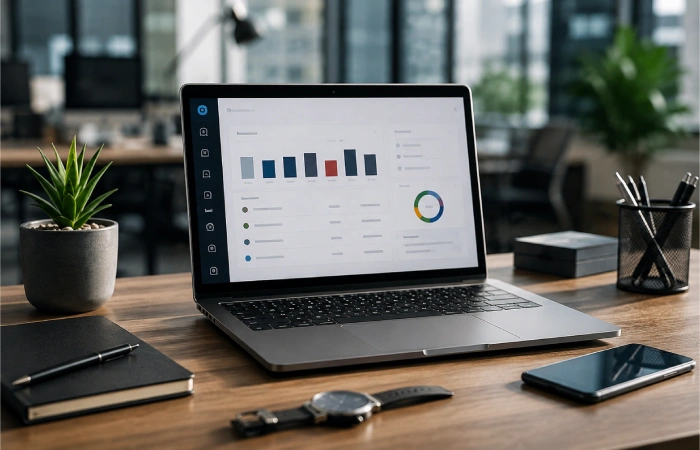
Time tracking is a helpful tool to improve your time management. This because the working hours record and the entire working hours can be assigned to individual tasks. This is, of course, even easier if you work with a digital tool such as time recording software. You can see at a look which activities take how much time. The evaluations show which tasks or times of day are particularly inefficient and prone to failure in your time management. It becomes clear where there is a need for action.
Projects can also plan together with colleagues, and responsibilities and deadlines can define. That makes working in a team a lot easier. The whole team can also see how much time has invested in the project and whether this corresponds to the planning specifications.