Last Updated: November 10, 2026
Your crypto wallet is looking healthy. There’s just one problem: you can’t use its digital balance to pay for groceries, cover an unexpected expense, or grab lunch. You need actual cash. So, how do you get it?
As a new trader, you might find the idea of turning your crypto into real money confusing and daunting. The process isn’t necessarily difficult, but making assumptions can get expensive. And nobody wants their first cash-out experience to become a cautionary tale.
Thankfully, there are multiple ways to convert your crypto into fiat and knowing what options are available will make the process quicker, safer and less stressful.
Table of Contents
1. Know What You’re Getting Into Before Selling
To convert your cryptocurrency into cash, you will need to sell it using an exchange service. How much you will receive depends on the current market value of the asset, the exchange rate provided by the service and any fees involved.
Sometimes new users are surprised to see that they won’t always get the market price listed online. Exchange rates can vary and there may be additional costs applied. Be sure to check what rate has been given and how much you will actually receive.
A good rule? Never focus exclusively on how much cryptocurrency you’re selling. Pay attention to how much cash you’ll actually collect.
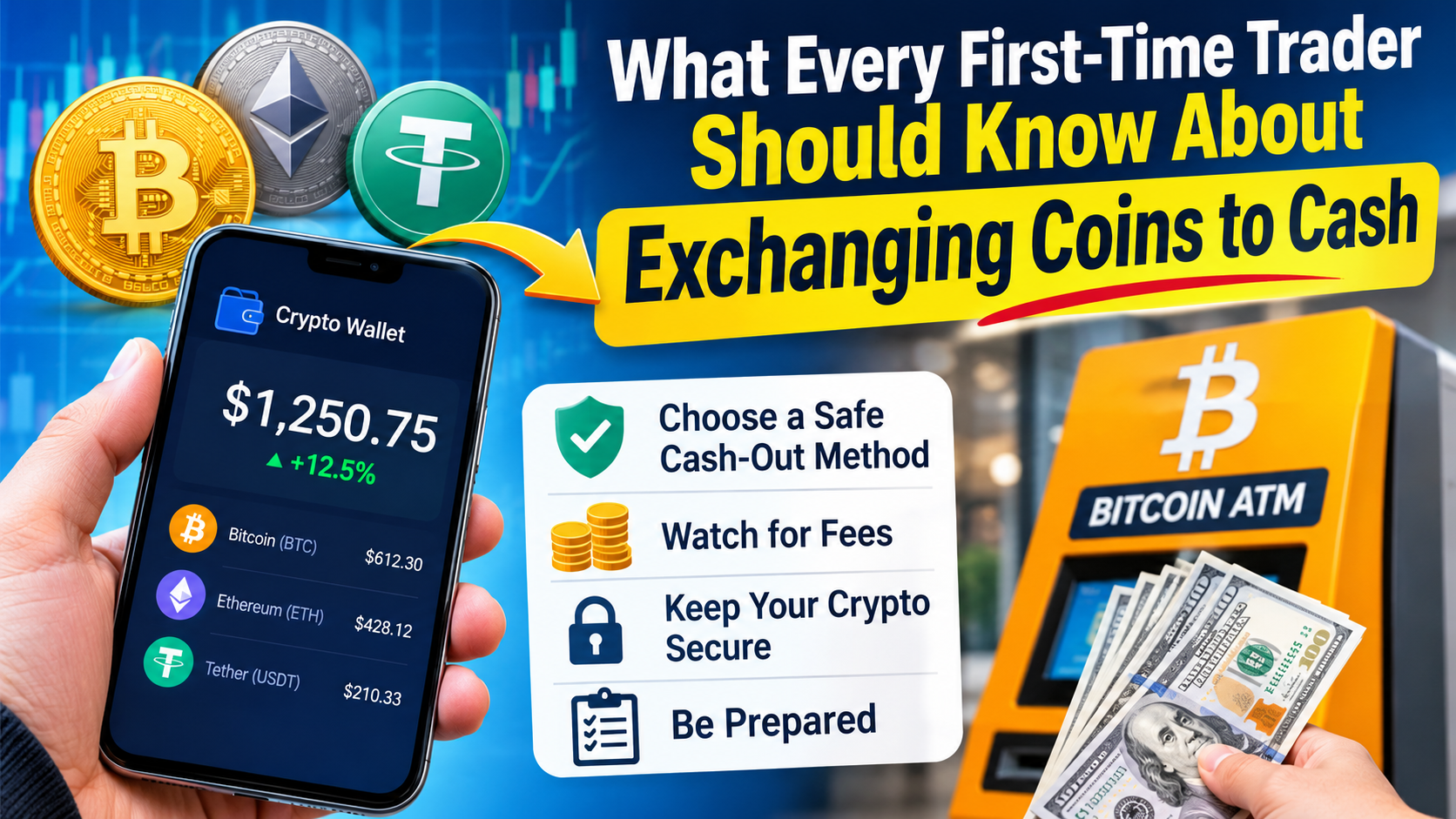
2. Bitcoin ATMs: Convenient, But Check the Features First
The layout of a Bitcoin ATM may be similar to an ATM, however its functionality will differ.
Many will allow you to buy cryptocurrency with cash whilst others will offer you the ability to sell cryptocurrency for real money. Some will require you to start a transaction within their app before being able to withdraw cash from the location.
If you’re planning to exchange coins to cash, confirm that your chosen machine supports cryptocurrency sales and cash withdrawals. Otherwise, you could arrive expecting money and discover that the machine only handles purchases. Not exactly a productive trip.
Before heading out to the ATM, check the operator’s website or location finder. This will help you understand what identification is required.
3. Pick Your Cash-Out Method Without Rushing
Bitcoin ATMs aren’t the only option. There are alternative options depending on your priorities.
Here’s a quick comparison:
- Online cryptocurrency exchanges: These allow you to sell your digital assets and withdraw funds through the banking methods that they support. These are great if you don’t need any instant access to cash.
- Peer-to-peer marketplaces: These connect buyers and sellers together. These are very flexible but you will need to ensure that payments are verified correctly.
- Bitcoin ATMs: This gives you access to real life locations to perform the supported crypto transactions and withdraw cash.
Which one should you choose? It depends on your priorities.
If you want instant access to cash, then a Bitcoin ATM may be a good option to consider. However, if you want to limit costs, then look at the online exchange services. While convenience is great, this should not always be the priority.
4. The Fee Trap: Look Beyond the Advertised Rate
There is nothing more frustrating than not getting paid as much for a successful sale. Some exchanges will charge transaction fees, network fees, spread costs and more depending on the provider you use.
For instance, if you sell $200 worth of crypto, you might not get as much in return due to the fees.
Before completing an exchange you should check:
- The exchange rate.
- Transaction fees charged by the provider.
- Network fees.
- How much cash you will actually receive.
Always compare the final rate you will receive. That’s the number that actually matters.
5. Protect Your Crypto Like You Protect Your Bank Account
Transactions made with cryptocurrency can often be permanent, so it is important to be very careful when securing your funds. Make sure you’re using a real cash out service and a legitimate website.
Take these easy steps to keep yourself safe:
- Double check the wallet address and amount of the transaction.
- Never share your private keys, passwords and verification codes.
- Keep proof of your transactions and confirmations.
- Don’t go onto unfamiliar sites and be cautious of unusual payments.
- Be wary of anyone you don’t know offering to carry out transactions for you.
If you are being pressured by a genuine financial service to send cryptocurrency due to an unexpected emergency or legal fine, then this should be avoided. If someone is rushing you, stop and investigate.
6. Prepare Before Turning Coins Into Cash
A successful cash-out starts before you reach the machine. Verify your account fits the verification requirements, and look at your current wallet balance. Understand how much you can send and how you can send it.
Depending on the provider, you may need to show ID and there may be location restrictions.
Make Your First Cash-Out a Smarter One
Trading crypto to fiat doesn’t have to be complicated. As long as you know how it works, what fees to expect, and pick the right provider, you can keep things simple. Just be sure to take some basic security measures.
If you’re using a Bitcoin ATM, ensure it allows trading (selling) of crypto. It comes down to knowing exactly what you are paying, what you’ll get and keeping your money safe. Do your research so your wallet will thank you.