Last Updated: September 8, 2026
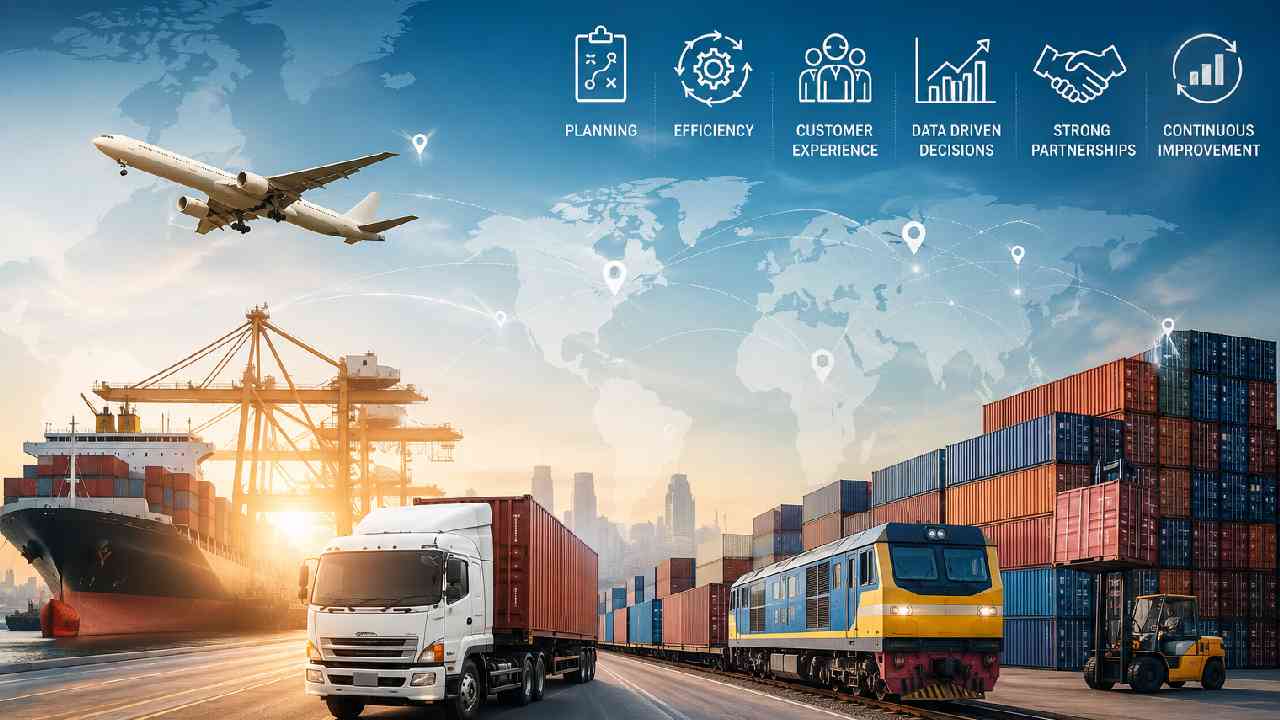
Growing a business is about more than increasing sales. As operations expand, companies face new challenges related to efficiency, customer satisfaction, communication, and resource management. One industry that has mastered these challenges is logistics. Whether moving products across cities or coordinating international supply chains, logistics companies have developed systems that help them stay organized and competitive.
Businesses in any sector can learn valuable lessons from the way logistics operations are managed. By applying these principles, companies can improve performance, reduce costs, and create a stronger foundation for long-term growth.
This article is belongs to Management & Operations
Table of Contents
The Importance of Planning Ahead
One of the biggest lessons from logistics is the value of detailed planning. Logistics providers rarely leave anything to chance. Routes, schedules, inventory levels, and delivery timelines are carefully mapped out to minimize delays and maximize efficiency.
Growing businesses can benefit from adopting a similar mindset. Instead of reacting to problems as they arise, leaders should forecast future needs and prepare for potential challenges. Strategic planning allows companies to allocate resources effectively, avoid bottlenecks, and maintain steady progress even during periods of rapid growth.
Businesses that think ahead are often better equipped to handle unexpected changes in demand or market conditions.
Efficiency Creates Competitive Advantages
Logistics companies thrive by finding ways to complete tasks faster and more efficiently. Every unnecessary step adds time and cost, which can affect profitability and customer satisfaction.
For growing businesses, regularly reviewing internal processes can reveal opportunities for improvement. Whether it’s streamlining communication, automating repetitive tasks, or improving workflows, efficiency helps teams accomplish more with the same resources.
Small improvements may seem insignificant on their own, but over time they can lead to substantial gains in productivity and profitability.
Customer Experience Matters at Every Stage
In logistics, customers expect accurate information, timely service, and clear communication. Companies that consistently meet these expectations build trust and encourage repeat business.
The same principle applies to businesses in every industry. Customer experience extends beyond the final product or service. Every interaction, from the initial inquiry to post-purchase support, contributes to how customers perceive a company.
Growing organizations should focus on creating seamless experiences that make customers feel valued. Clear communication, responsiveness, and reliability often become key differentiators in competitive markets.
Data Helps Drive Better Decisions
Modern logistics relies heavily on data. Companies track shipments, monitor performance metrics, and analyze trends to make informed decisions. Access to accurate information allows managers to identify inefficiencies and improve operations continuously.
Businesses experiencing growth can gain similar advantages by paying close attention to data. Tracking key performance indicators helps leaders understand what is working and where improvements are needed.
Rather than relying solely on intuition, businesses that use data effectively are often able to make smarter decisions that support sustainable expansion.
Adaptability Is Essential
Logistics providers operate in constantly changing environments. Traffic conditions, weather disruptions, fuel costs, and customer demands can all shift unexpectedly. Successful companies remain flexible and adjust their strategies when necessary.
Growing businesses face similar challenges. Market trends evolve, customer preferences change, and new competitors emerge. Organizations that remain adaptable are better positioned to respond quickly and maintain momentum.
Building flexibility into business processes allows teams to solve problems efficiently without disrupting overall operations.
Strong Partnerships Support Growth
The logistics industry depends on partnerships. Carriers, suppliers, warehouses, and service providers work together to ensure smooth operations. Strong relationships help companies maintain reliability and overcome challenges more effectively.
Businesses in other sectors can benefit from building strategic partnerships as well. Reliable vendors, technology providers, and service partners often contribute significantly to long-term success.
For example, companies managing vehicle relocations may work with specialized providers such as car transporters in Miami to ensure vehicles reach their destinations efficiently. Choosing dependable partners can save time, reduce stress, and improve customer outcomes.
Continuous Improvement Drives Long-Term Success
Perhaps the most valuable lesson from logistics is the commitment to continuous improvement. Successful logistics companies constantly evaluate their operations, seeking ways to reduce costs, improve speed, and enhance service quality.
Growing businesses should adopt the same approach. Regularly reviewing processes, gathering customer feedback, and investing in employee development can create a culture focused on progress.
Companies that embrace continuous improvement are more likely to remain competitive and adapt successfully as they grow.
Employee Engagement Supports Business Growth
As businesses expand, their employees become increasingly important to maintaining efficient operations. A company may have strong processes and technology, but employees are responsible for carrying out many of the activities that keep those processes running. For this reason, businesses should pay attention to motivation, communication, recognition, and employee satisfaction. Practical strategies to improve employee engagement can help organizations build teams that are more involved in achieving business objectives.
Engaged employees may also be more willing to identify operational problems and suggest improvements. This is particularly valuable in logistics and other fast-moving industries where small inefficiencies can create delays or additional costs.
Creating a Positive Workplace
A growing organization also needs a workplace environment that supports collaboration and communication. Employees who can work effectively with colleagues are better positioned to coordinate responsibilities and solve problems.
Businesses can encourage this environment by promoting respect, teamwork, clear communication, and accountability. Developing habits around creating a positive impact at the workplace can contribute to stronger working relationships and a healthier organizational culture.
A positive workplace can also support business growth because employees are more likely to cooperate when responsibilities change or new processes are introduced.
Reducing Costs Through Better Processes
Cost control is another important lesson that growing businesses can take from logistics. As operations become larger, small recurring expenses can have a significant effect on overall profitability. Companies should regularly review administrative processes and identify activities that consume unnecessary time or resources.
Technology and outsourcing can sometimes help businesses simplify these processes. For example, companies that handle large amounts of recorded meetings, interviews, or business communications may consider ways businesses can save costs by opting for transcription services. Reducing time spent on repetitive administrative work can allow employees to focus on higher-value responsibilities.
The goal is not simply to cut expenses. Effective cost management should help businesses use their available resources more efficiently while maintaining service quality.
Building a Scalable Business
The lessons learned from logistics can ultimately help businesses create systems that are easier to scale. Planning ahead, improving efficiency, using data, maintaining strong partnerships, supporting employees, and controlling costs all contribute to a stronger operational foundation.
A business that grows without improving its internal systems may eventually struggle with delays, communication problems, rising costs, and inconsistent customer experiences. By contrast, organizations that continuously improve their processes are better prepared to handle increasing demand.
Growth should therefore be viewed as more than an increase in sales. It should involve building people, processes, technology, and partnerships that can support the business as it moves into its next stage.