Last Updated: September 4, 2026
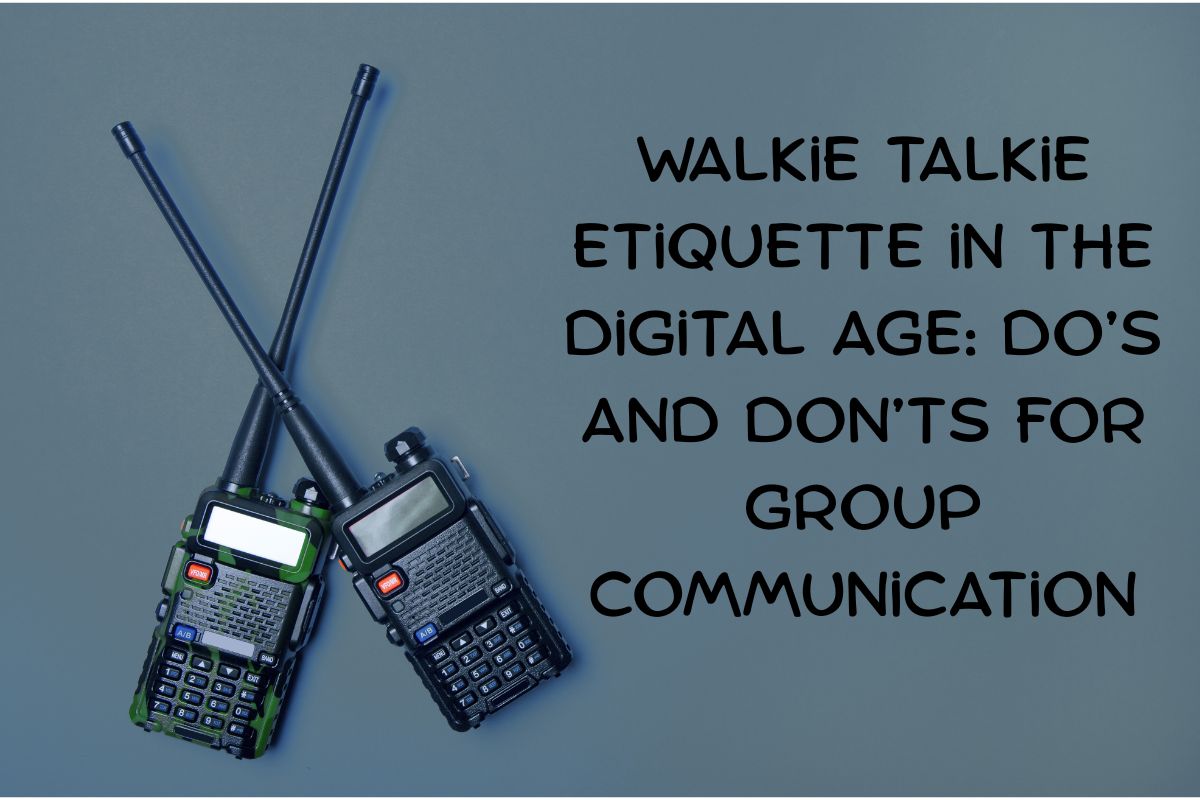
In a time ruled by smartphones and instant messaging apps, two-way radios remain a reliable tool for many industries and activities that require group communication.
Construction, event planning, emergency response coordination, and camping expeditions are just a few of the many examples where these devices are essential to effective communication.
In contrast to a one-on-one mobile phone conversation, when you talk on a walkie talkie, you are in public (albeit in a limited way) with your group, which means that your messages should be concise, clear, and professional. Understanding and practicing radio etiquette is essential for avoiding miscommunication, reducing channel congestion, and maintaining respect among team members or group participants.
This article is belongs Content Marketing
Table of Contents
Start with a Clear Call and Identify Yourself
You never want to interrupt someone else while they are talking. You don’t know what is happening on the other end, and your message might not be important enough to stop someone else’s important message. So, if you think the channel might be in use, wait a few seconds to see if someone else comes on. This is especially important in larger teams where multiple people share the same communication channel.
A clear introduction can make communication much easier when several people are sharing the same channel. Start by identifying the person or team you are trying to reach, followed by your own name or role if necessary. This gives the other person enough information to understand who the message is intended for and who is speaking.
For example, a construction worker might say the name of a supervisor before giving an update, while an event team member might identify a specific department before requesting assistance. This simple practice prevents confusion and reduces the possibility of several people responding at the same time.
Good communication habits also matter when information needs to move between radio users and people communicating through other channels. Businesses that regularly interact with customers, vendors, employees, and field teams can benefit from understanding the principles discussed in communication with the client, particularly when messages need to remain professional and easy to understand.
Keep Messages Short and Focused
Walkie-talkies serve speedy, practical communication. They are not meant for protracted or off-topic conversations. Stick to the point, use plain language, and break up longer instructions into smaller, clearer steps. If more detailed discussion is needed, schedule it for a private meeting or switch to a channel that isn’t as active.
Short messages are especially important when a channel is being used by a large group. Every unnecessary sentence keeps other people from communicating when they may have information that requires immediate attention.
A useful approach is to think about the purpose of your message before pressing the transmit button. Decide what the other person needs to know, communicate the essential information, and then release the button. If a message involves several instructions, communicate them in an organized sequence rather than delivering everything at once.
This principle applies beyond radio communication. Modern businesses often communicate with audiences through websites, email, messaging applications, and other digital platforms. Using personalized content strategies for reaching your ideal audience can similarly help organizations make messages more relevant and easier for specific audiences to understand.
Use Standard Radio Language
It is helpful to use standard radio phrases so that everyone can understand and respond more efficiently. Phrases that are commonly used and well understood include “Copy” (signal is received and understood), “Over” (signal has been received and the operator is awaiting a reply), and “Out” (conversation is over, no reply is expected).
These terms are likely to be understood by anyone on the other end of the radio and are especially useful in high-noise or high-pressure situations where confusion might easily arise.
Standard terminology is valuable because it creates a shared communication system. When everyone understands what common phrases mean, there is less need to repeat instructions or ask for clarification.
The words people choose can have a significant impact on how effectively information is received. Whether the conversation takes place over a radio, telephone, email, or digital platform, clear language makes communication more efficient. Even seemingly simple vocabulary choices can influence understanding, which is why examining how the world’s longest words teach us about communication can provide an interesting reminder that effective communication is ultimately about being understood.
Check Equipment and Use Proper Volume
Commonly, poor communication comes from using the device incorrectly. Before group activities or a work shift, check to see that the batteries are charged, the volume is set to an appropriate level, and the device is positioned correctly.
If any of these factors are not as they should be, the audio will not come through clearly, and the commander will have to repeat orders or program messages for an audio distorted by either too much or too little sound.
Equipment checks should become part of the normal routine rather than something people remember only after communication problems occur. A quick inspection before a shift can help identify low batteries, damaged accessories, weak signals, or unsuitable volume settings.
In professional environments, communication equipment may also be part of a larger technology infrastructure. Organizations that rely on connected communication systems should understand how different technologies work together and how reliable communication supports everyday operations. Learning more about telecommunications can provide broader context for the technologies that allow people and organizations to exchange information across different environments.
Avoid Unnecessary Channel Traffic
One of the easiest ways to improve radio etiquette is to avoid transmitting information that does not need to be shared with the entire group. Personal conversations, jokes, repeated information, and unrelated comments can quickly make an active channel difficult to manage.
Before speaking, consider whether everyone listening actually needs the information. If only one person needs the message, use an appropriate private communication method whenever possible.
This becomes particularly important during emergencies, large events, construction projects, and other situations where multiple teams may depend on the same channel. A clear channel gives users a better opportunity to communicate urgent information without competing with unnecessary transmissions.
Listen Before You Speak
Good radio communication involves listening just as much as speaking. Users should pay attention to ongoing conversations and avoid transmitting over another person.
Listening carefully can also prevent duplicate instructions. If someone has already provided an update, repeating the same information may create confusion rather than improving understanding.
Developing active listening habits helps teams recognize important details, understand instructions correctly, and respond appropriately. It also encourages people to think about the complete communication process rather than treating radio use as simply speaking into a device.
Respect Privacy and Professional Boundaries
Although radio communication is useful for groups, users should remember that conversations on shared channels may be heard by everyone connected to that channel. Sensitive, personal, or confidential information should therefore not be discussed casually over a shared radio network.
Team members should also maintain a professional tone. Even when communication is informal, respectful language helps maintain a positive working environment and reduces the chance of conflict or misunderstanding.
The same principle applies to digital communication. Written and spoken information should be accessible to the people who need it while avoiding unnecessary exposure of private information. Organizations communicating across websites and digital platforms can also benefit from following web content accessibility guidelines to make information easier for different audiences to access and understand.
Repeat Important Information When Necessary
Radio signals can sometimes be affected by distance, buildings, weather, background noise, equipment limitations, or other interference. If an important instruction is not understood clearly, ask the sender to repeat it instead of guessing.
For critical information, repeating key details can also confirm that both parties have the same understanding. This is particularly useful for locations, numbers, names, schedules, safety instructions, and other information where even a small misunderstanding could cause problems.
A simple confirmation such as “Copy” can let the sender know that the message was received. When necessary, the recipient can repeat the essential details back to the sender for confirmation.
Create Simple Communication Rules for Teams
Organizations that use walkie-talkies regularly should establish a few basic rules and make sure every team member understands them. These rules can cover channel selection, call signs, emergency communication, appropriate language, equipment handling, and procedures for reporting technical problems.
Training new users before they begin working with the equipment can also reduce communication mistakes. A short orientation can explain how to hold the radio, when to transmit, how to identify other team members, and what to do when a message is unclear.
Written communication resources can make these guidelines easier to distribute and reference. Teams that want to provide employees or participants with a compact resource can also organize important communication information into an e-book that can be shared as part of onboarding or training materials.
Modern Walkie Talkie Communication Is About Clarity and Courtesy
The three core principles of good radio etiquette are clarity, courtesy, and communication awareness. Walkies work best when everyone uses them in a responsible and professional manner, regardless of the setting. These devices serve their purpose well, whether you need to coordinate people on a job site or around your house in a game with your children.
To ensure smoother operations, better teamwork, and fewer misunderstandings in all these contexts, you need to follow some simple do’s and don’ts.
Effective radio etiquette is ultimately about making communication easier for everyone involved. A well-managed channel allows important information to move quickly without unnecessary interruptions, while clear language ensures that instructions are understood the first time.
Whether radios are being used by a small camping group, a large event team, construction workers, emergency personnel, or another organized group, consistent communication habits can make a significant difference. By identifying yourself clearly, keeping messages focused, listening carefully, respecting shared channels, checking equipment, and confirming important instructions, users can make two-way radio communication more reliable and professional.
The digital age has introduced countless new ways to communicate, but the fundamentals remain remarkably consistent. People still need clear information, appropriate timing, active listening, and mutual respect. When those principles are followed, walkie-talkies remain a practical and effective communication tool even in an environment dominated by smartphones and instant messaging.