Last Updated: September 24, 2026
Business growth brings new opportunities, but it can also create new risks. As organizations add employees, adopt new technology, serve more customers, and handle larger volumes of data, their digital environments become increasingly complex. Without suitable protection, that expansion can create additional openings for cyber threats.
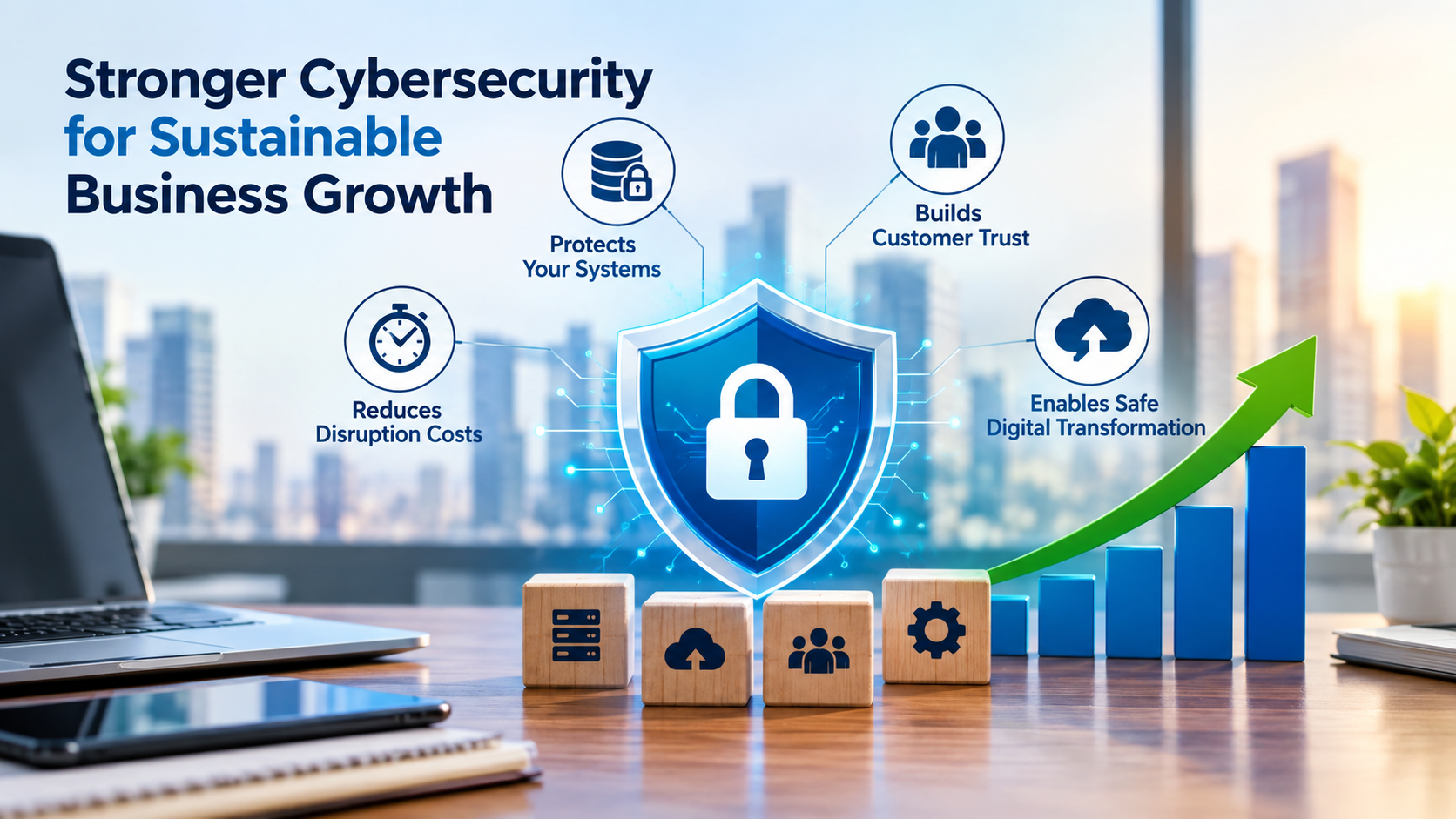
Stronger cybersecurity can help businesses manage these risks while continuing to grow. Rather than treating security purely as a defensive measure, organizations can make it part of their long-term approach to resilience, customer trust and operational stability.
Table of Contents
Protecting the Foundations of Growth
Modern businesses depend heavily on digital systems. Customer databases, cloud platforms, payment systems, communication tools and internal applications may all be essential to everyday operations. A serious cyber incident affecting any of these systems could result in downtime, financial losses, or disruption for customers.
Cybersecurity measures help protect the infrastructure that supports the organization. As the business expands, its security strategy can develop alongside it, reducing the risk that rapid growth leaves important systems or information exposed. For organizations exploring more proactive security approaches, understanding the MDR meaning can also provide useful context around how ongoing threat detection and response can complement existing security measures.
Building and Maintaining Customer Trust
Customers increasingly expect businesses to handle their personal and financial information responsibly. A data breach of any degree can therefore create problems that extend beyond the immediate technical impact. Customers may become less confident in an organization if they believe their information is not adequately protected.
Strong cybersecurity practices demonstrate that data protection is being taken seriously. Although no organization can eliminate every cyber risk, maintaining appropriate safeguards and responding effectively to threats can support customer confidence. Trust can become particularly important as a company enters new markets, works with larger clients, or begins handling more sensitive information.
Reducing the Cost of Business Disruption
Sustainable growth depends on consistency. Businesses need their systems, employees, and services to remain available so they can meet customer expectations and maintain productivity.
Cyberattacks can interrupt that stability. Ransomware, compromised accounts, and other incidents may prevent employees from accessing critical systems or cause services to become temporarily unavailable. Recovery can consume time and resources that could otherwise have been invested in growth.
A stronger security posture can reduce the likelihood and potential impact of these disruptions. Measures such as access controls, monitoring, employee awareness, and incident response planning can all contribute to greater operational resilience.
Supporting Safe Digital Transformation
Growth often involves adopting new technology. Businesses may move workloads to the cloud, introduce automation, expand remote working, or integrate new software into their operations. Each change can bring benefits, but it may also alter the organization’s cyber risk profile. Making cybersecurity part of technology planning from the beginning allows businesses to pursue innovation without treating security as an afterthought. This can make it easier to scale digital operations while maintaining appropriate controls as systems become more complex.
Making Cybersecurity Part of Long-Term Growth
Cybersecurity and business growth do not need to be competing priorities. In many cases, effective security helps create the stability that makes sustainable expansion possible. By protecting important systems, supporting customer confidence, limiting disruption, and enabling safer technology adoption, cybersecurity can become part of the foundation for long-term growth. Businesses that develop their security practices alongside their operations are better positioned to expand without allowing preventable cyber risks to undermine their progress.