Last Updated: September 3, 2026
Table of Contents
What is Account-Based Marketing?
From the B2B marketing department, very general campaigns are often created to reach as many companies as possible in a target market. Account-based marketing is an alternative to B2B strategies that focuses marketing and sales resources on a well-defined series of target accounts within a market, with personalized campaigns designed to connect with each account.
This article is belongs to Marketing Fundamentals
With ABM the marketing message focuses on the specific attributes and needs of a given account, hence its name.
According to 975, the ABM offers superior or far superior profitability than other marketing initiatives.
Who Uses Account-Based Marketing?
Many companies, especially those that want to attract specific high-value customers, have found that they achieve better results with an ABM strategy than with a generalized focus on their marketing and sales campaigns.
ABM requires more customization at the account level. So the cost of implementing it used to be higher than traditional marketing. However, technological advances in the marketing industry allow teams to use ABM for much less and on a much larger scale.
Account-based marketing can also be particularly useful in specialized industries where businesses need to identify and communicate with a carefully defined group of potential customers. For example, companies operating in the cryptocurrency sector can explore top crypto marketing agencies to understand how specialized marketing campaigns can help reach targeted audiences and support business growth.
Businesses developing a focused B2B approach can also refer to the American Marketing Association’s B2B marketing resources for insights into business-to-business marketing, customer relationships, and strategic campaign development.
For organizations using ABM, understanding the broader principles of B2B marketing strategies can also help create a stronger foundation for account selection, messaging, and campaign planning. Instead of treating every potential customer in the same way, businesses can use account-level information to determine which companies are most valuable and what type of communication is most appropriate for each one.
Top 5 Benefits Of Account-Based Marketing
- Clear profitability: An effective ABM translates into good results for your business. In fact, compared to other marketing initiatives, ITSMA’s 2014 account-based marketing survey found that “ABM outperforms any other B2B marketing strategy or tactic.”
- Leveraging resources: Being so specific, ABM enables the marketing team to make the most of resources. And create marketing programs that specifically optimized for the target accounts.
- Personal and optimized: Account-based marketing strategies include customizing messages and communications direct to specific accounts in order to get campaigns to connect with the target audience. Customers are more likely to respond to content created specifically for them. That is of interest to their business and that well adapted to the phase of the purchase process.
- Simple goal and statistics control: When analyzing the effectiveness of campaigns, whether through emails, advertisements, websites, or events. It is easier to draw clear conclusions with a specific selection of accounts than with a large data set.
- Sales Coordination Made Simple: ABM is one of the most efficient ways to coordinate sales and marketing. This is mainly due to the fact that when creating an ABM program. The marketing team thinks much like the sales team: it focuses on accounts. How to connect with them, how to attract them, and how to generate income through them.
How Account-Based Marketing Supports Lead Generation
A successful ABM campaign depends on identifying the right organizations before investing significant marketing resources. Teams can evaluate company size, industry, purchasing behavior, business needs, and potential revenue to create a focused list of accounts. Once those accounts are identified, marketing and sales teams can develop messages that address specific challenges rather than relying on broad promotional content.
This approach can work particularly well when combined with inbound marketing, because useful content can attract decision-makers while account-based campaigns provide a more focused path for engaging priority companies. Businesses can therefore combine targeted outreach with educational content, helping prospects move from initial awareness toward meaningful conversations.
Personalization and Recruitment Marketing
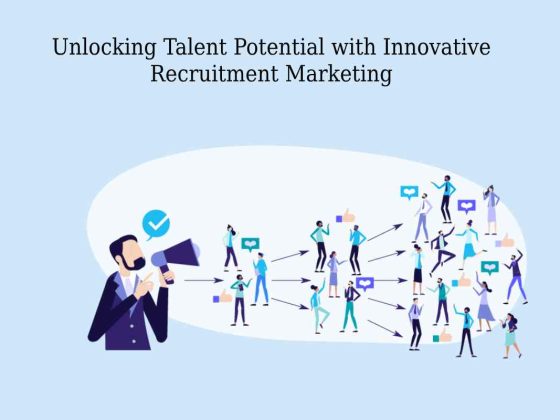
Personalization is one of the strongest characteristics of ABM because different accounts may have very different priorities. The same principle can also be applied when businesses communicate with specialized audiences outside traditional customer acquisition campaigns. For example, organizations interested in employer branding and talent acquisition can explore innovative recruitment marketing to understand how targeted messaging can connect with specific groups.
ABM also becomes more effective when marketing and sales teams work from shared goals and consistent account information. Marketing can identify engagement signals, while sales teams can use those insights to prioritize conversations with accounts showing genuine interest. This alignment reduces duplicated effort and makes it easier to measure which campaigns contribute to valuable business relationships.
Measuring Account-Based Marketing Performance
ABM campaigns should be measured using metrics that reflect both engagement and business outcomes. Depending on the campaign, companies may monitor account engagement, website activity, content interactions, qualified opportunities, conversion rates, customer acquisition costs, and revenue generated from target accounts.
Because ABM focuses on a defined group of companies, marketers can compare performance across individual accounts and identify which messages, channels, and offers produce the strongest results. Over time, these insights can help refine account selection and improve personalization, making future campaigns more efficient.